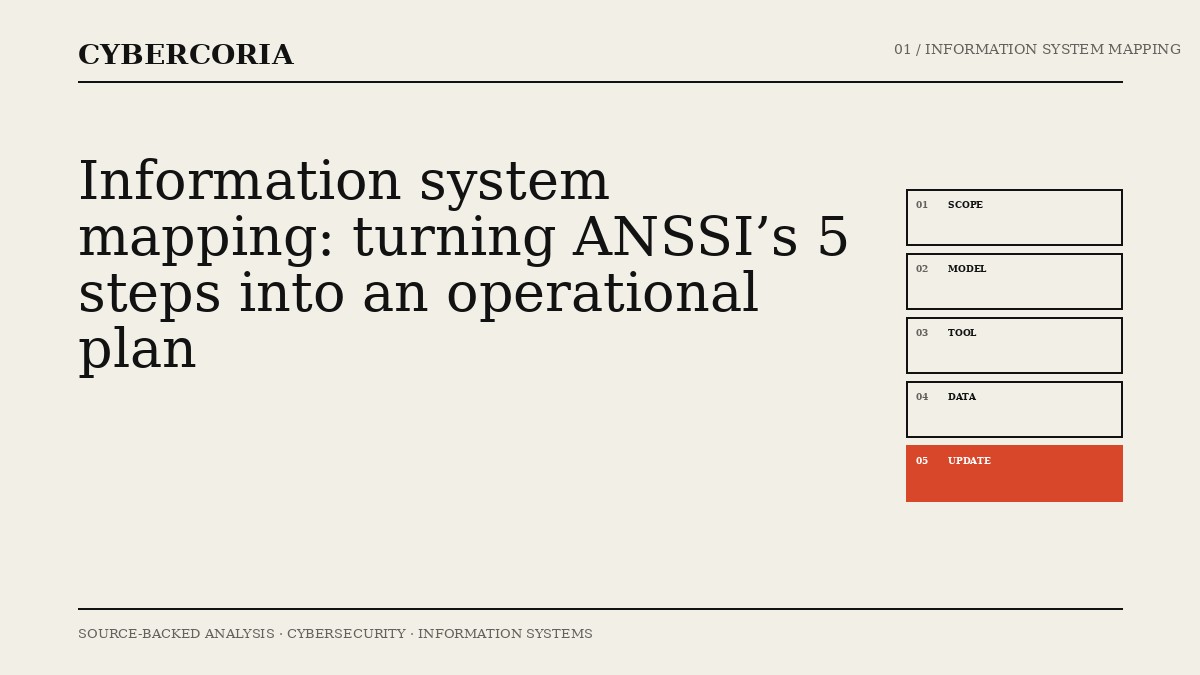
Information system mapping: turning ANSSI’s 5 steps into an operational plan
ANSSI proposes a pragmatic, incremental and sustainable approach to information system mapping. Here is how to turn it into a concrete working plan.
Cybercoria connects architecture, dependencies, requirements and controls to produce analysis that can be verified — and used.
FEATURED
4 analyses published · sources verified
POSITION
Security rarely starts with a tool. It starts with an accurate understanding of the system and its dependencies.
Cybercoria connects information system mapping, cloud, cybersecurity and regulation. Primary sources come first; the limits of a method or control are stated when they affect the conclusion.
Read our editorial approach →4 WAYS TO READ THE SYSTEM
One information system, four complementary angles
Understand an information system through its objects, flows and, above all, its dependencies.
Explore →02Read cloud security posture beyond a score and place every finding in its technical and business context.
Explore →03Connect official texts, governance obligations and the reality of the information system without turning compliance into a slogan.
Explore →04Selective monitoring of changes that can alter an architecture, security or compliance decision.
Explore →LATEST ANALYSES
Browse the index →Article 21 of NIS2 requires a risk-management approach covering incidents, continuity, supply-chain security, access and asset management. Where does information system mapping genuinely help?
ANSSI proposes a pragmatic, incremental and sustainable approach to information system mapping. Here is how to turn it into a concrete working plan.
The GDPR record organises processing activities by purpose. Information system mapping describes applications, flows and infrastructure. Connecting the two can improve governance without confusing their roles.
A global score can help track cloud posture, but it is not enough. Scope, identity, exposure, logging and remediation need to be analysed in context.